

If your firewall is pegged at 100% CPU while the uplink is drowning in junk, the fix is not to buy a bigger firewall and hope it survives. Put upstream DDoS scrubbing in front of it, let the scrubbing layer absorb volumetric traffic, and keep the firewall for what it does well, policy enforcement and stateful filtering on already-cleaned sessions. That layered setup is the practical answer when attack traffic is larger than the box, the link, or the session table can tolerate.
In production, a firewall with DDoS protection is not a single product category. It is a chain of controls, and the chain only works when each layer has a narrow job. Traditional perimeter firewalls were built to inspect flows and enforce rules, but modern attacks now arrive as sustained floods, reflection traffic, and application-layer abuse that can saturate the pipe before the firewall ever gets a fair shot.
Table of Contents
- Why a Firewall Alone Stops Failing Under Modern Attacks
- How Stateful Filtering and DDoS Mitigation Work Together
- Deployment Options Compared On Prem Cloud and Managed
- Key Features and Selection Criteria That Actually Matter
- Configuration Best Practices for Real Production Loads
- Monitoring Logging and Incident Response in Practice
- Choosing the Right Layered Stack for Your Workload
Why a Firewall Alone Stops Failing Under Modern Attacks
A stateful firewall starts failing in the most ordinary way, it spends all its time trying to keep up with packet volume, session churn, and lookup pressure. Once the attack load gets ahead of the ingress link, the firewall stops acting like a control point and starts taking damage from the traffic it was supposed to inspect.
The failure mode is usually capacity, not correctness
The problem is not that the policy engine is wrong. It is that the firewall was built to track connections and enforce rules, not to absorb endless hostile traffic. Once the session table fills or packet processing saturates, legitimate flows get dropped with the junk. Independent guidance recommends watching session-table utilization at peak load, session-establishment rate, and behavior at the ceiling, because valid sessions can be rejected or overwritten once the table is full, and mitigation only handles volumetric floods up to roughly 80% to 90% of the ingress pipe before congestion takes over (MECS guidance).
That is why a layered design works better. The firewall keeps doing perimeter policy and state tracking, while upstream scrubbing removes traffic classes that should never reach the box. NETSCOUT reported more than 8 million DDoS attacks worldwide in the second half of 2025, across 203 countries, with some attacks reaching 30 Tbps in size, and Cloudflare said it blocked 20.5 million attacks in Q1 2025 alone, including about 700 hyper-volumetric attacks above 1 Tbps or 1 Bpps (NETSCOUT, SentinelOne summary of Cloudflare data).
Practical rule: if the attack can fill the pipe faster than the firewall can inspect it, the firewall is in the wrong place in the path.
Modern attacks don't look like old SYN floods
Older firewall thinking still assumes a noisy SYN flood or a blunt UDP blast. The 2025 reality is broader. Reflection attacks, multi-vector campaigns, and application-layer probes can look legitimate enough to consume state without tripping old thresholds. Cloudflare's public numbers show the pace clearly, with 21.3 million DDoS attacks blocked in all of 2024 and 20.5 million in just Q1 2025, which is why firewall-only thinking has fallen behind (SentinelOne summary of Cloudflare data).
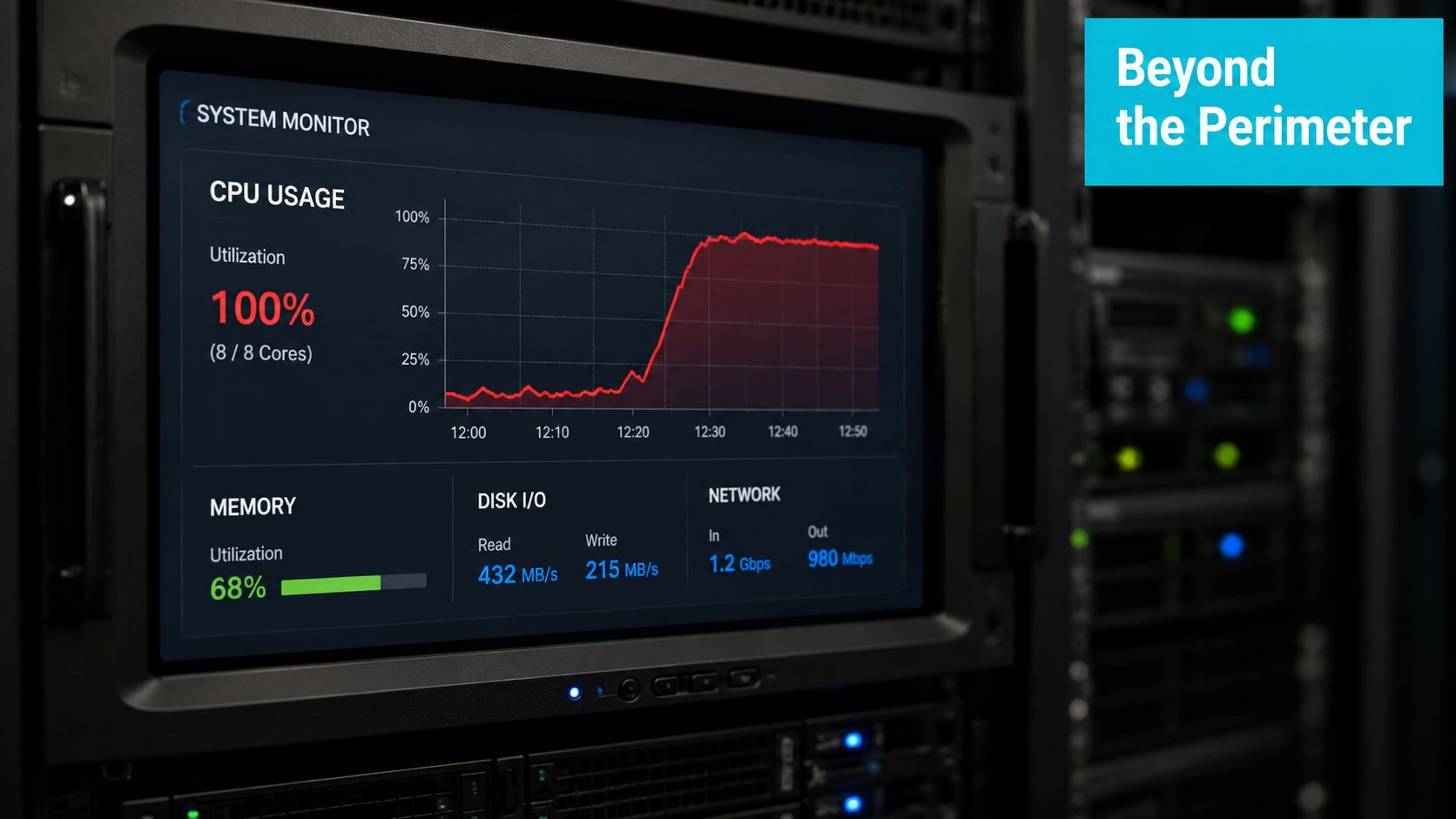
In a Tampa multi-tenant rack, this shows up fast. One tenant's bad day can spill into everyone else on the same edge if every packet has to hit a single device first. The practical setup keeps the firewall close to the workload, but not alone at the internet edge when the attack class can exhaust the uplink.
How Stateful Filtering and DDoS Mitigation Work Together
A good firewall with DDoS protection splits the job by traffic class. The scrubbing layer handles what is obviously hostile or too large to process inline, while the firewall receives only the clean subset and applies its normal rules, zone policy, and session tracking.
Packet flow in a layered stack
The cleanest way to think about it is in terms of traffic journey. Cloudflare documents that its DDoS systems may drop, rate-limit, or challenge packets, DNS queries, or HTTP requests depending on attack type, and it distinguishes ordinary L3/L4 network-layer defense from Advanced TCP Protection for spoofed ACK floods, SYN floods, and SYN-ACK reflection attacks (Cloudflare DDoS FAQ).
Cloudflare also lists the kinds of vectors production filtering needs to recognize, including DNS amplification, Memcached amplification, QUIC floods, UDP floods, SYN floods, SYN-ACK reflection attacks, ICMP floods, and related reflection or protocol-violation traffic (Cloudflare attack coverage). That matters because the firewall should not be asked to classify every one of those forms at line rate.
A simplified flow looks like this.
| Layer | Job | Typical decision |
|---|---|---|
| Scrubbing fabric | Absorb volumetric and obvious abuse | Drop, rate-limit, challenge |
| Tunnel or direct handoff | Return clean traffic | GRE, VLAN, or other protected path |
| Firewall | Enforce policy on valid sessions | Allow, deny, inspect, log |
| Origin | Serve the application | Only sees cleaned traffic |
Detection is behavioral, not just threshold based
The detection side is what makes the stack work under pressure. Cloudflare's guidance says its dynamic rules look for attack patterns, known tools, suspicious patterns, protocol violations, large numbers of origin errors, and excessive traffic hitting the origin or cache, which means the mitigation layer is watching both packet behavior and origin-side symptoms, not just bandwidth spikes (Cloudflare how DDoS protection works).
NIST adds a useful edge case for reflective abuse. It recommends rate-limiting non-initial UDP fragments at an ISP peering edge and defines them as UDP packets with fragment offset greater than 0, which matters because many amplification attacks rely on fragmented traffic rather than simple floods (NIST SP 800-189). That kind of filtering belongs upstream, before the firewall sees anything.

When the stack is tuned correctly, the firewall stops acting like a shock absorber and goes back to being a policy engine. That's the division of labor, and it's the only one that holds up when the traffic is large, mixed, and automated.
Deployment Options Compared On Prem Cloud and Managed
The right deployment model depends on where the risk sits. If the traffic is predictable and the team can manage the edge directly, an on-prem or colo firewall can work well. If the attack volume exceeds the site's ingress headroom, cloud scrubbing becomes the front line.
Side by side decision table
| Model | Typical Throughput | Cost Profile | Mitigation Time | BGP Required | Best For |
|---|---|---|---|---|---|
| On-prem firewall at the edge | Best when traffic is predictable and the protected path stays within the box's and uplink's limits | Higher capital spend up front, lower operational complexity if the team already owns the edge | Immediate for small attacks, weak against floods that exceed the pipe | No for local policy, yes if steering traffic to external scrubbing | Internal services, small internet-facing apps, tightly controlled environments |
| Cloud scrubbing with upstream handoff | Scales beyond the local circuit because clean traffic returns after filtering | More operational cost, less hardware burden at the site | Fast once routing or tunnels are in place | Often yes for diversion, or protected tunnels after announcement | Public SaaS, e-commerce, gaming, and exposed APIs |
| Managed firewall and DDoS service | The provider operates both the tuning and the response process | Ongoing service cost, reduced staffing burden | Depends on runbook maturity and provider tooling | Usually handled by the provider | Teams without 24/7 NOC coverage or specialist network staff |
Hybrid is usually the default in production
The common pattern is not pure cloud and not pure on-prem, it's hybrid. The firewall owns east-west or zone policy, while the scrubbing layer takes north-south attack load before it can starve the firewall's interfaces. If you're comparing options, start with the workload, then decide whether the business can tolerate a few minutes of diversion during an incident.
For teams that want the operational burden reduced, managed firewall services are the cleanest fit when no one wants to babysit alerts at 3 a.m. That model does not remove engineering work, but it shifts response and tuning into a service that is built to watch the stack continuously.
What this looks like in production
A multi-tenant environment in Tampa usually pushes me toward a split design. Colo or bare metal handles the app and stateful policy, while external mitigation protects the uplink from becoming the choke point, especially when hurricanes, reroutes, or provider issues make local resilience matter more than a clean lab topology.
Key Features and Selection Criteria That Actually Matter
Buyers usually ask for the wrong numbers. Gbps ceilings matter only after you know the packet size, the state table behavior, and the handoff path. The core question is whether the stack still behaves when traffic is tiny, bursty, and hostile.
Size for packets, sessions, and handoff paths
A firewall that advertises large throughput on paper may fall apart on small packets. For example, a 10 Gbps edge firewall can drop to about 3 to 4 Gbps when packets fall below 100 bytes, so the buying decision should be based on worst-case packet-per-second load, not nominal bandwidth. That point comes up repeatedly in real deployments because attackers rarely send nice, large packets that are easy to forward.
| Feature | Why It Matters | Verification Check |
|---|---|---|
| Session table size | SYN floods and long-lived connections consume state first | Review live session counts under load and compare to the documented ceiling |
| Connection rate handling | High new-session bursts can starve legitimate users | Watch new sessions per second and reject behavior during a test window |
| Small-packet throughput | 64-byte storms stress CPU and forwarding more than large flows | Test with small-packet traffic, not just synthetic large flows |
| GRE or BGP handoff | Clean traffic must return without breaking routing | Confirm the scrubbing path and failover workflow before go-live |
| TLS and HTTP inspection | Encrypted layer 7 floods can hide inside valid-looking sessions | Verify the device can still classify traffic when the payload is encrypted |
| Policy granularity | Geo-blocking and source controls need to be usable during an incident | Confirm rule order and scope on real interfaces, not just in the GUI |
CLI checks should prove the box, not the brochure
On firewalls that expose operational counters, verify them directly. The exact commands vary by vendor, but the operational pattern is the same.
show session info
show performance
netstat -an | grep SYN_RECV
Expected output should show healthy session headroom, non-saturated CPU, and a low number of half-open sessions during normal traffic. If those counters are already high before the attack starts, you do not have enough margin.
Operational note: if the lab test only uses large packets, the lab test lied to you. Small packets find the bottleneck first.
The selection criteria that matter most are usually the ones marketing underplays. You want visible mitigation time, documented false-positive behavior, and a clean upstream integration path, because those are the places where production traffic gets hurt if the product was sized for slides instead of reality.
Configuration Best Practices for Real Production Loads
The best firewall with DDoS protection setup starts boring. Turn off services you do not need, lock down the management plane, and make sure the firewall itself is not the bottleneck before you even think about attack tuning. That sounds obvious, but under flood conditions it is usually the weakest box in the path that decides whether the rest of the stack survives.
Harden the edge before you enable mitigation
Start with the basics on the firewall host or appliance.
sysctl -w net.ipv4.tcp_syncookies=1
sysctl -w net.ipv4.conf.all.rp_filter=1
sysctl -w net.ipv4.conf.default.rp_filter=1
Those settings help with SYN pressure and source-path sanity on Linux-based firewalls and gateways. On vendor appliances, use the equivalent flood, state, and control-plane protection features, then validate that the management interface is isolated from the data path.
A sane production baseline usually includes:
| Control | Purpose | Failure Mode If Skipped |
|---|---|---|
| Management-plane ACLs | Keeps admin services off the public edge | Attackers probe or exhaust the management path |
| Control-plane policing | Protects the device itself under flood load | The firewall becomes the first thing to fail |
| Asymmetric routing controls | Stops return-path mismatch from breaking sessions | Stateful inspection drops valid replies |
| Whitelists for trusted partners | Preserves API and partner traffic during challenge mode | Business integrations get blocked with the attack |
If you use an upstream scrubbing provider, align the MTU and verify the tunnel or handoff mechanism before cutover. Packet fragmentation and path mismatch cause more pain than many teams expect, especially when traffic returns through GRE or a dedicated transit path.
Tune DDoS profiles by protocol, not by hope
HTTP, DNS, and TLS need different controls. Rate caps per source, challenge behavior for suspected bots, and explicit allow rules for known API partners are the controls that usually hold up. Cloudflare says its systems can drop, rate-limit, or challenge based on attack type, which is a useful operational model even if you use a different provider (Cloudflare FAQ).
For a layered stack, keep these checks in place:
# Example verification commands on Linux-based systems
ip -s link show
ss -s
conntrack -S
If you run a web-facing platform and want the security stack pre-bundled with hosting and firewalling, ARPHost, LLC offers managed infrastructure and secure hosting options that already include multi-layer DDoS protection and firewalling in its service design. I'd still tune the rules for the workload, but I would rather start from a protected baseline than bolt controls on after the first incident.
Pre-deployment checklist
| Step | What to confirm | Rollback point |
|---|---|---|
| Passive tap test | Scrubbing sees the same traffic shape as production | Remove the test route or mirror |
| Baseline capture | Normal rates for sessions, errors, and latency | Restore previous alert thresholds |
| Detect-only mode | Rules fire without blocking users | Switch the policy back to count-only |
| Cutover rehearsal | Diversion and withdrawal work cleanly | Withdraw the new route and re-advertise the old one |
Firewall configuration guidance is the right internal reference if you need to compare your rule order, hardening choices, or state tracking before moving to enforcement. The goal is simple, keep the firewall predictable before you ask it to survive a real flood.
Monitoring Logging and Incident Response in Practice
At 3 a.m., the stack is only as good as the graphs you trust. A real flood often starts with a spike in new sessions, then a jump in dropped packets, then a user complaint that the site feels slow even though the app servers are still alive. The first job is not heroics, it's proving where the traffic is being filtered.
Watch the right counters
For Prometheus or Grafana, graph the counters that answer one question, is the mitigation layer doing its job before the origin feels pain. New-session rate, dropped packets per second, SYN-ACK ratio, diversion percentage into the scrubbing center, and origin latency from synthetic probes are the ones that usually expose trouble first.
Structured logging should be in place before the incident, not after. Use CEF or LEEF where your SIEM expects it, and make sure log forwarders can absorb a burst because attack-time logging often spikes well beyond baseline. The exact multiplier varies by environment, but the important part is that the forwarder and retention plan need headroom, not optimism.
A realistic runbook under load
- Confirm whether traffic is being diverted to the scrubbing layer.
- Classify the vector, UDP amplification, SYN flood, HTTP flood, or mixed.
- Apply or adjust upstream mitigation first.
- Tell stakeholders what is blocked, what is still at risk, and whether origin service is degraded.
- Capture packet samples and firewall counters while the event is active.
- Record which rule would have caught the traffic earlier.
The post-incident note matters as much as the live mitigation, because the same vector usually comes back with a slightly different shape.
For a concise internal reference on the response side, incident response guidance is useful when you need to turn observations into a repeatable checklist. In practice, the best teams are the ones that can prove what changed, when it changed, and which layer handled the traffic first.
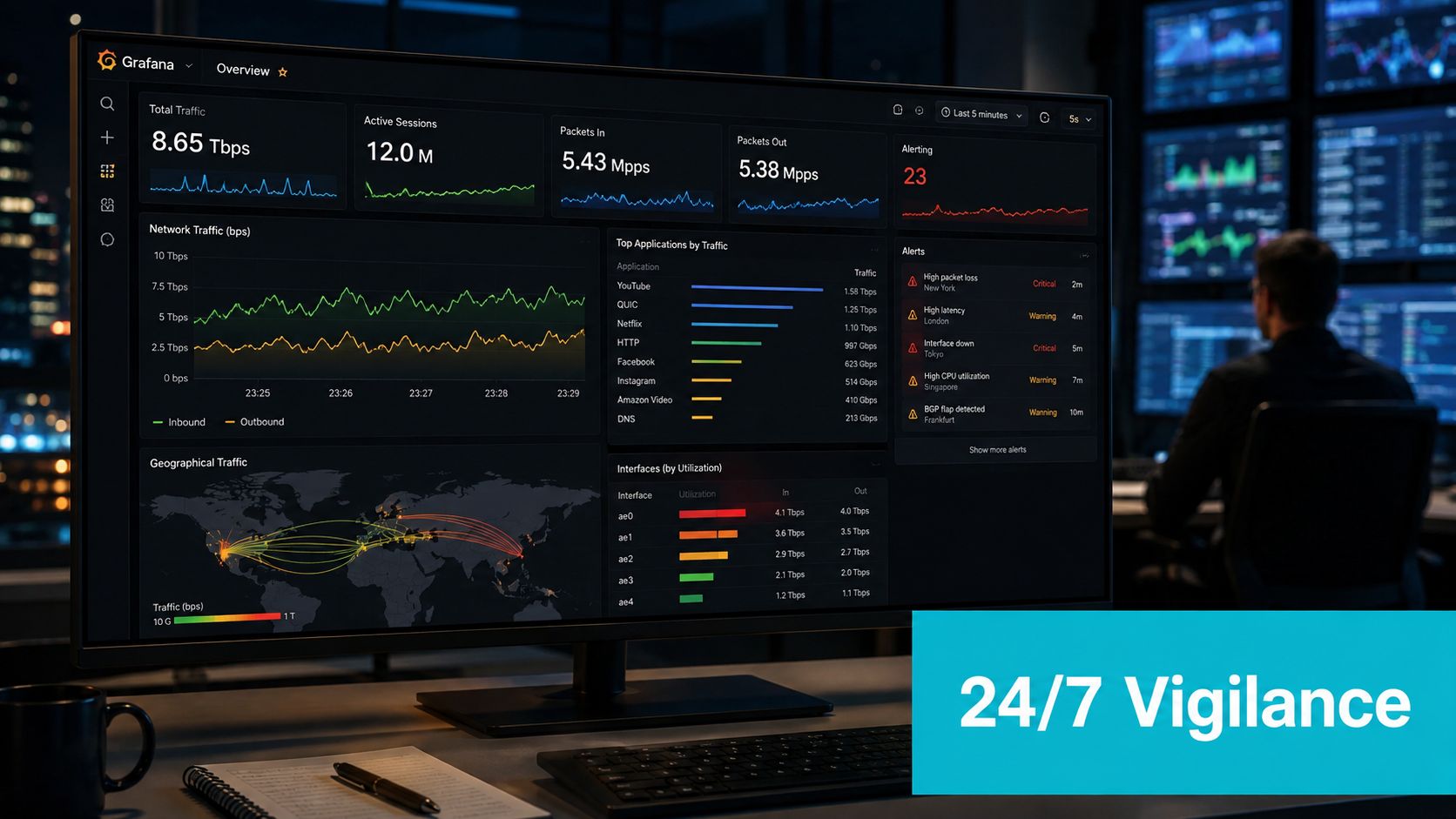
In a Tampa facility, that kind of visibility matters even more during storms or provider instability, because you do not want to confuse a network event with an attack. Good telemetry keeps those two problems separate.
Choosing the Right Layered Stack for Your Workload
The stack choice comes down to three inputs, upstream bandwidth at risk, how much of the application surface is exposed, and whether your team can safely steer routing during an active incident. If those three answers are strong, a stateful firewall may be enough for smaller services. If any of them is weak, upstream scrubbing stops being optional.
| Workload | Recommended Stack Weight | Why |
|---|---|---|
| Public SaaS | Heavy upstream scrubbing, then firewall policy | Broad internet exposure and mixed protocol abuse |
| Gaming | Strong upstream mitigation with low-latency handoff | Volumetric floods and sensitivity to jitter |
| E-commerce | Layered approach with strict app and session controls | Peak traffic spikes and customer-facing downtime risk |
| Internal APIs | Firewall plus selective upstream protection | Smaller surface, but partner traffic still needs continuity |
For most production environments, the safest model is a hybrid firewall with DDoS protection path, where the firewall handles policy and the scrubbing layer handles pressure. That gives you room to survive attacks that are too large for the local link, while still keeping the firewall in charge of what is allowed to the origin.
If you want a Tampa-based team to help size that layered design against measured attack behavior rather than brochure numbers, start with the protected infrastructure options at ARPHost, LLC. The right fit is the one that keeps your firewall useful after the flood starts, not the one that sounds largest on paper.
If you want help designing the layered path around your actual traffic, ARPHost, LLC provides colocation, bare metal, VPS, private clouds, managed services, and firewall-backed hosting from Tampa, Florida. Their team can map the firewall, scrubbing, and routing layers to the workload you run today, then adjust the policy as attack behavior changes. Visit ARPHost, LLC to review the options and match them to your environment.
Leave a Reply
You must be logged in to post a comment.