

DNA replication copies a cell's genome before division, proceeding at roughly 50 nucleotides per second in human cells and about 1,000 nucleotides per second in bacterial systems. In infrastructure, replication keeps changing data or workloads synchronized across systems for availability, recovery, read scale, or geographic redundancy, but it isn't the same thing as a backup.
You may be looking at a green replica status right now while still lacking a usable recovery plan. A replica can follow the primary closely, accept reads after a host failure, and still fail to recover a deleted table, a corrupted dataset, or an encrypted workload from an earlier point in time. The practical question isn't what is replication. It's whether the copy you maintain can deliver the failure outcome your business needs.
Table of Contents
- What Replication Does in Infrastructure
- How Replication Works
- Replication Types and Trade-Offs
- High Availability and Recovery Use Cases
- Database, Storage, and Proxmox Examples
- Monitor Lag, Failures, and Recovery Tests
- Choose Replication for Your Environment
- Replication Planning Checklist
What Replication Does in Infrastructure
Replication is the continuous or scheduled synchronization of changing data and workloads between systems. A primary database sends committed changes to replicas. A storage system transfers changed blocks. A hypervisor copies virtual machine state or snapshots to another node. The implementation differs, but the operational purpose is consistent: maintain another usable copy close enough to the source to support a defined outcome.
Consider a MySQL primary with an asynchronous replica. The primary's disk fails, and the replica can be promoted or continue serving reads. That helps with availability. If an administrator deleted a table three days ago, however, the replica probably contains the same deletion. Replication preserved the current state, not the historical state. A restorable backup, preferably with point-in-time recovery, is what addresses that problem.
| Copy type | What it preserves | Typical operational value | What it doesn't guarantee |
|---|---|---|---|
| Synchronized replica | Current or near-current system state | Failover, read traffic, workload continuity | Historical recovery from logical errors |
| Restorable backup | Earlier recoverable states | Deleted data recovery, rollback, long-term retention | Immediate service continuity |
| Tested disaster recovery plan | People, procedures, infrastructure, and recovery artifacts | Predictable restoration during a major incident | Protection from every failure unless regularly maintained |
A useful production test is simple. Ask when the replica last applied a change, when the last backup was restored successfully, and which operator can execute the failover or rollback. If those answers aren't visible in monitoring and documentation, the environment has copies but not necessarily resilience.
The rest of the decision comes down to four checks. Identify the replication class that matches the workload, choose a consistency model the application can tolerate, measure lag and recovery behavior, then test restoration and rollback. SMB environments often need a manageable asynchronous design paired with backups. Enterprise systems may justify synchronous clusters, separate failure domains, and dedicated recovery procedures. Hosted environments still need the same evidence, even when a provider operates the underlying hardware.
How Replication Works
Start with one system accepting writes. That system is commonly called the primary, leader, source, or publisher. It records a change in a transaction log, write-ahead log, journal, snapshot stream, or change data capture pipeline. One or more replicas receive that change and apply it locally.
A unidirectional design sends changes from the primary to replicas:
Application writes
        |
        v
Primary database
        |
        +----> Read replica A
        |
        +----> Read replica B
        |
        +----> Disaster recovery replica
This topology is straightforward to reason about. It also limits write conflicts because one system owns the write path. A chain can reduce the primary's outbound work, but it introduces another dependency. If replica B receives changes only through replica A, an outage or lag at A affects B.
Bidirectional or active-active replication lets multiple peers accept writes. That can place write capacity closer to users in different regions, but conflict resolution becomes part of the application design. Two nodes can update the same record in different ways, and a replication layer must either reject, merge, or prioritize one result. A topology that looks more available on a diagram can be harder to recover safely.
Synchronization state is a measurable condition
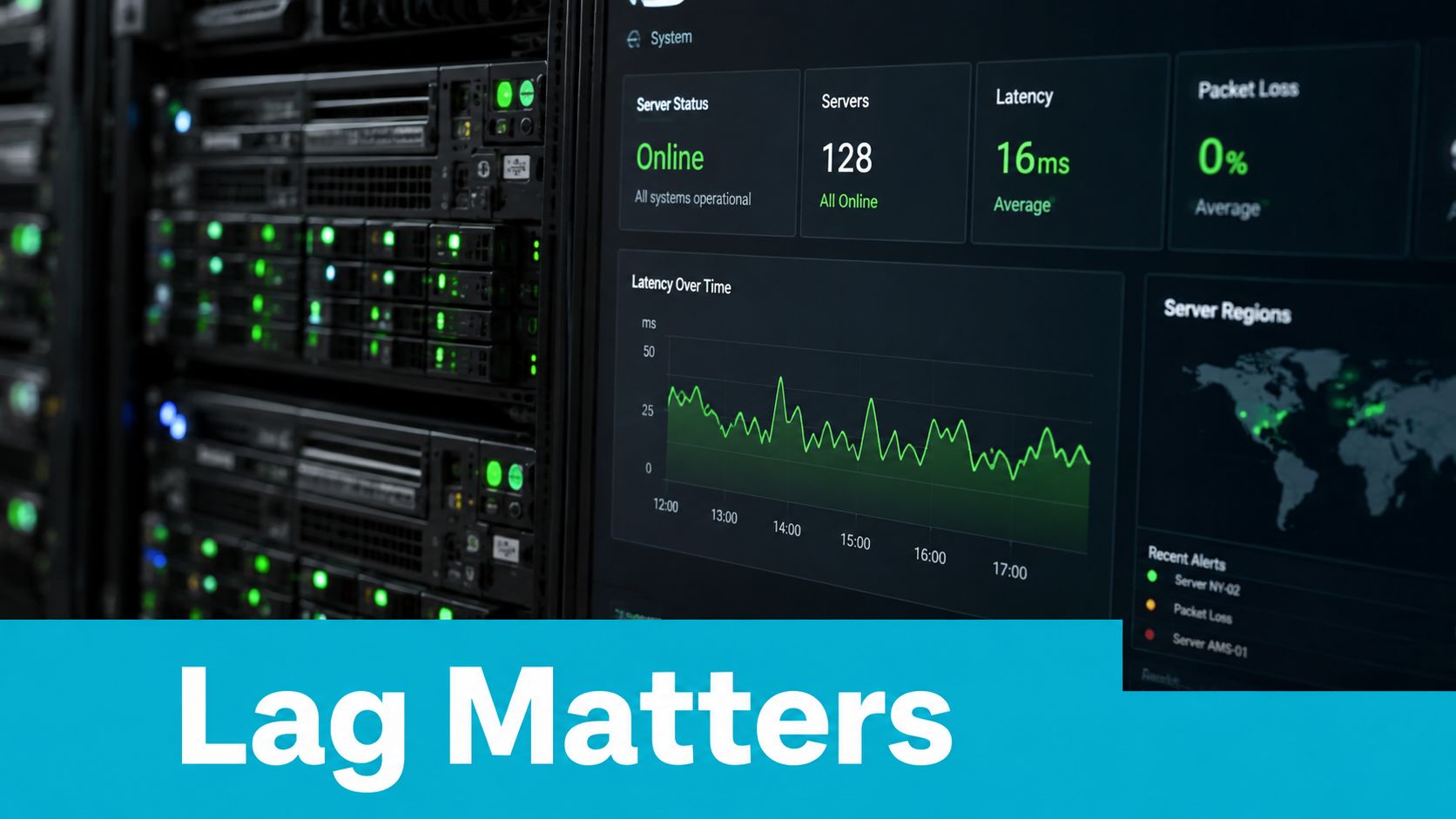
A replica isn't just synchronized or unsynchronized. It may be current, a few transactions behind, or applying changes slowly while the transport connection remains healthy. The gap between a committed change on the primary and its visibility on the replica creates a consistency window. Heavy write load, slow storage, network interruption, or an overloaded apply process can widen that window.
The mechanism also operates at different granularity levels:
- Row-level database replication transfers logical changes to selected tables or records. It supports read distribution and selective integration, but schema changes and conflicting writes require care.
- Block-level storage replication transfers changed storage blocks or dataset snapshots. It protects a larger unit, but the replica may not understand whether an application was in a transactionally safe state.
- File and object synchronization copies files, objects, metadata, and sometimes versions. It suits documents, archives, and media, but open files and delete propagation need explicit handling.
- VM and container replication moves a full workload image or its storage state. It simplifies mobility, although virtual hardware, networking, application consistency, and orchestration still matter.
Practical rule: Treat replication state as an observed position in a change stream, not as a green icon.
Replication history is operational data. Systems expose measures such as bytes transferred, records processed, latency, data volume, and compression factor. Veritas documentation on replication statistics notes that statistics can be cumulative from the creation of a replication context, so an apparently large total doesn't necessarily describe the current incident. Operators need current lag, last successful application, and recovery evidence alongside cumulative counters.
Replication Types and Trade-Offs
The first decision is whether the primary must wait for the replica before confirming a commit. Synchronous replication makes the remote acknowledgement part of the commit path. Asynchronous replication confirms locally and ships changes afterward.
| Dimension | Synchronous Replication | Asynchronous Replication |
|---|---|---|
| Commit latency | Includes remote acknowledgement and network path | Usually limited to local commit path |
| Durability guarantee | A configured replica has acknowledged the change before commit completes | The latest committed changes may still be only on the primary |
| Bandwidth sensitivity | Sensitive to link delay, interruption, and sustained throughput | Tolerates more distance and temporary network disruption |
| Recovery point exposure | Can reduce unreplicated committed changes when correctly configured | Recovery may lose changes not yet transported or applied |
Synchronous replication isn't automatically safer. If the remote node or link becomes unavailable and the system requires acknowledgement, writes may pause. Asynchronous replication usually preserves write availability during a link problem, but a failover can expose a gap. The right choice follows the application's tolerance for latency, write interruption, and lost recent changes.
Database replication
Primary-replica database replication copies committed changes through transaction logs or change streams. It can support read scaling, standby promotion, analytics offload, and regional recovery. Group or multi-primary topologies add availability but also introduce membership, quorum, conflict, and split-brain concerns.
Logical replication can operate at table or row granularity, which is useful when only part of a database belongs in another system. It won't automatically reproduce every database object or operational setting. Physical replication is broader, but it ties the replica more closely to the database engine and storage layout.
Storage and dataset replication
Block-level replication suits LUNs, ZFS datasets, and VM storage. It can move a large workload without teaching the replication system about every file. The risk is crash consistency. A replica may represent storage as it existed during an interrupted application write unless snapshots or application quiescing provide a coherent point.
ZFS send and receive provides incremental snapshot transfer after an initial full send. It works well for controlled dataset movement, but snapshot retention, naming, interrupted streams, and destination capacity must be managed. A stale snapshot schedule can create slow convergence even while the job itself reports success.
Files, objects, VMs, and containers
File replication with rsync is transparent and widely available. It can preserve permissions and ownership, but it isn't a database transaction system. Object replication works well for immutable archives and versioned data, while delete propagation can turn an operator mistake into a distributed deletion if retention isn't separate.
VM replication carries an entire guest workload, which simplifies relocation. Container replication is more dependent on the orchestration and persistent volume model. Neither approach replaces application-aware backups.
Qlik's database replication documentation describes full, incremental, and log-based approaches and highlights the availability benefit alongside synchronization overhead and lag risk. The cheapest mechanism rarely meets the strictest recovery objective. Application tolerance, not vendor preference, should determine the design.
High Availability and Recovery Use Cases
Replication is useful when the desired outcome is explicit. A high-availability cluster needs a nearby copy that can assume service after a node failure. A disaster recovery site needs a separate failure domain and a known recovery point. A read pool needs replicas that can accept queries without turning the primary into a reporting server.
| Use Case | Infrastructure Outcome | Replication Design | What Replication Does Not Solve |
|---|---|---|---|
| High availability | Service continues after a host or node failure | Synchronous cluster or closely placed primary-replica design | Application bugs, quorum mistakes, and unsafe promotion |
| Disaster recovery | A separate site can restore service after a major outage | Asynchronous database, storage, or VM replication across failure domains | Untested regional procedures and missing dependencies |
| Read scaling | Read traffic moves to replicas | Primary with read replicas and routing rules | Stale reads, uneven query load, and replica saturation |
| Analytics offload | Reporting runs away from the write path | Logical or physical replica dedicated to analytics | Poor query design and uncontrolled refresh workloads |
| Geographic redundancy | Workloads or data exist in another region | Cross-region asynchronous or active-active replication | Regional failover coordination and application conflicts |
A healthy replica can also preserve a bad state. Logical corruption, an accidental DROP TABLE, ransomware, and an application-level deletion may replicate quickly. If the attacker has access to the primary, they may also reach the replica or its credentials.
That makes backup isolation essential. Snapshot backups, immutable object storage, retention policies, and point-in-time recovery provide historical options that a live replica doesn't. A disaster recovery plan adds the missing human and procedural layer: DNS or traffic changes, secrets, licenses, monitoring, application startup order, and a rollback decision.
Replication reduces the time between failure and service restoration. It doesn't prove that restoration will work.
For a high-availability design, test promotion without assuming the old primary can immediately return. For disaster recovery, measure the actual recovery point produced by the last drill. For analytics, verify that stale data is acceptable to the report owners. For geographic redundancy, exercise the region failure path while documenting how writes are fenced and how the original region returns without creating conflicting data.
Database, Storage, and Proxmox Examples
These examples use common Linux tooling and show the checks that matter. Commands and configuration differ across releases, so confirm the installed version before applying them to production.
MySQL 8.0 with GTID asynchronous replication
Prerequisites include matching MySQL 8.0 major behavior, binary logging on the source, a replication user, network access restricted to the replica, and enough disk space for relay logs. GTID makes failover and re-provisioning easier because the replica tracks transaction identities rather than relying only on file positions.
On the source, verify the relevant settings:
SHOW VARIABLES
WHERE Variable_name IN
('log_bin', 'gtid_mode', 'enforce_gtid_consistency', 'binlog_format');
On a newly seeded replica, configure the source connection. MySQL 8.0 uses CHANGE REPLICATION SOURCE TO, while older examples often use the legacy CHANGE MASTER TO syntax. The requested legacy form remains valid on installations that support it:
CHANGE MASTER TO
  MASTER_HOST='db-primary',
  MASTER_USER='repl',
  MASTER_PASSWORD='replace-with-secret',
  MASTER_AUTO_POSITION=1;

START REPLICA;
SHOW REPLICA STATUSG
For stronger acknowledgement behavior, MySQL semisynchronous replication can require a replica acknowledgement before the source completes a commit, subject to its timeout and fallback settings. Verify the active plugin and status rather than assuming semisync is enabled:
SHOW PLUGINS;
SHOW STATUS LIKE 'Rpl_semi_sync%';
A usable status check should show running I/O and SQL threads, an empty last error, and a lag value that fits the recovery objective. If the primary crashed, don't blindly promote a replica with unknown relay state. Record the executed GTID set, fence the old primary, then promote only after confirming which transactions reached the candidate.
A single bad transaction can stop an older-style asynchronous stream. Skipping it may be appropriate only after investigating the event and accepting the data divergence:
STOP REPLICA;
SET GLOBAL SQL_SLAVE_SKIP_COUNTER = 1;
START REPLICA;
SHOW REPLICA STATUSG
On newer MySQL 8.0 deployments using GTIDs, use an error-specific recovery procedure instead of casually skipping transactions. The safest rollback is often to stop the replica, preserve its logs, rebuild it from a fresh consistent backup, and reconfigure GTID auto-positioning.
PostgreSQL 15 streaming replication
PostgreSQL 15 uses standby.signal rather than the older recovery.conf file. Create a physical standby from a base backup, provide a replication connection, and write the connection settings into postgresql.auto.conf:
sudo -u postgres pg_basebackup
  -h pg-primary
  -U replicator
  -D /var/lib/postgresql/15/main
  -Fp -Xs -P -R
The -R option writes standby connection information and creates the standby signal file. On the primary, inspect connected standbys:
SELECT application_name,
       client_addr,
       state,
       sync_state,
       pg_size_pretty(pg_wal_lsn_diff(pg_current_wal_lsn(), replay_lsn)) AS replay_gap
FROM pg_stat_replication;
A logical replication slot prevents required WAL from being removed before a subscriber consumes it. That protects a subscriber from falling permanently behind, but an abandoned slot can fill the primary's storage. Check slots regularly:
SELECT slot_name,
       slot_type,
       active,
       restart_lsn,
       confirmed_flush_lsn
FROM pg_replication_slots;
If the standby is broken or its required WAL is gone, rebuilding is usually safer than improvising a missing segment. Stop PostgreSQL on the standby, preserve relevant logs, re-seed with pg_basebackup, and verify pg_stat_replication after startup. Rollback means fencing the promoted node, deciding which system owns writes, and either restoring the old primary as a standby or restoring both systems from a known-good recovery point.
ZFS snapshots and rsync
For ZFS, create a named snapshot and send it to a remote dataset:
zfs snapshot tank/app@replica-2026-09-01
zfs send tank/app@replica-2026-09-01 |
  ssh backup-zfs zfs receive -F backup/app
The next transfer can be incremental if both snapshots exist:
zfs snapshot tank/app@replica-2026-09-02
zfs send -i tank/app@replica-2026-09-01
  tank/app@replica-2026-09-02 |
  ssh backup-zfs zfs receive -F backup/app
Verify the destination snapshot and dataset properties before treating the job as complete:
ssh backup-zfs zfs list -t snapshot -o name,creation,used
-F can roll the destination back to the most recent snapshot when receiving. Use it only when the destination is dedicated to this replication stream. A rollback procedure should retain the source snapshots, stop applications before reverting, and confirm that the destination contains the expected dataset state.
For file trees, rsync can preserve metadata and delete files removed at the source:
rsync -aHAX --numeric-ids --delete
  /srv/app-data/ backup-file:/srv/app-data/
Run with --dry-run first when changing deletion behavior. rsync doesn't provide database-consistent snapshots by itself, so pair it with application quiescing or filesystem snapshots.
Proxmox VE and Proxmox Backup Server
Proxmox VE high availability depends on cluster membership and corosync communication. Build the cluster with reliable low-latency networking, consistent time, and tested quorum behavior. VM replication jobs can transfer guest storage state between nodes, while live migration moves a running guest when the storage and network design support it. The Proxmox high availability service is relevant when the cluster needs operational assistance rather than an untested failover promise.
Check cluster state and replication tasks:
pvecm status
pvesr list
ha-manager status
A node that disappears can trigger fencing or HA recovery. Never reintroduce a partitioned node without confirming which side owns the VM. The rollback path is to stop duplicate guests, preserve logs, identify the authoritative disk state, and rejoin or rebuild the failed node.
Proxmox Backup Server adds image-level backup and datastore synchronization. Create a remote target, configure a sync job, and use namespaces to separate tenants or workloads. Namespace-based encryption helps keep backup data protected from other administrative contexts, but the encryption keys must be retained outside the failed environment.
Verify datastore health and run verification jobs:
proxmox-backup-client status
proxmox-backup-manager datastore list
proxmox-backup-manager verify list
A sync job is not a restore test. Restore a VM or file into an isolated target, boot it without conflicting network identity, and record the recovery time and data point reached.
Monitor Lag, Failures, and Recovery Tests
A green replication status means only that the software hasn't reported a condition it considers fatal. It doesn't prove that the replica has current data, that the data is readable, or that promotion will produce a working application.
Start with the values that map directly to recovery objectives:
- Replica lag in seconds: How old can a promoted copy be?
- WAL or binlog position: Is transport healthy, or is apply stalled?
- Snapshot age: When was the last usable storage point created?
- Last successful sync: Did the latest job finish, or merely start?
- RPO achieved in testing: What data gap did the last recovery exercise produce?
For MySQL 8.0, inspect both transport and apply status:
SHOW REPLICA STATUSG
A relevant excerpt might look like this:
Replica_IO_Running: Yes
Replica_SQL_Running: Yes
Seconds_Behind_Source: 0
Last_IO_Error:
Last_SQL_Error:
Retrieved_Gtid_Set: ...
Executed_Gtid_Set: ...
A nonzero lag value can be real trouble when it exceeds the application's recovery tolerance. A zero value can also be misleading during an idle period, because no new transactions are available to reveal whether the replica can sustain the write rate. MySQL may also report NULL when the SQL thread isn't running or the value can't be calculated. Investigate the error and GTID positions instead of clearing the alert.
For PostgreSQL, query the primary:
SELECT application_name,
       state,
       sync_state,
       write_lag,
       flush_lag,
       replay_lag,
       pg_wal_lsn_diff(pg_current_wal_lsn(), replay_lsn) AS bytes_behind
FROM pg_stat_replication;
A connected standby with increasing replay lag has an apply or storage problem, even if the connection remains established. A disconnected standby needs a timeline and WAL-retention review before restart.
Repair without hiding the incident
Skipping a transaction can restore forward motion, but it can also create silent divergence. Record the error, export the affected row or event if possible, and compare the primary and replica after the repair. Rebuild when the gap is unknown, required logs have expired, or consistency matters more than avoiding a seed operation.
For storage replication, re-establish a common snapshot base before sending incrementals. For a failed Proxmox backup sync, inspect the task log, confirm datastore space and remote connectivity, then rerun a controlled sync before declaring the target current.
A practical recovery test cadence includes nightly Proxmox Backup verification jobs, quarterly MySQL point-in-time recovery drills, and regional failover simulations. These aren't magic intervals, but they force the team to test different failure classes instead of repeatedly checking service status. The disaster recovery testing checklist should include application startup, credentials, traffic steering, data validation, and rollback.
Alert on recovery objectives, not on convenient dashboard colors.
In production, multi-tenant infrastructure makes this especially important. One busy database, backup stream, or noisy VM can consume shared storage and network capacity, causing lag for otherwise healthy tenants. Operators should alert on sustained lag, missing sync completion, WAL or binlog retention pressure, failed verification, and an untested recovery path.
Choose Replication for Your Environment
Choose replication from the recovery objective outward. Start by documenting the maximum acceptable data gap and the maximum acceptable service interruption. These are commonly expressed as recovery point and recovery time objectives, and the recovery point objective guide helps frame the first of those decisions.
| Environment | Recommended Replication | Validation Requirement |
|---|---|---|
| SMB workload | Asynchronous MySQL or PostgreSQL replica with scheduled VM backups | Confirm replica lag, restore backups, and rehearse promotion with a small operations team |
| Enterprise database | Synchronous database cluster where latency is acceptable, plus independent backups | Test quorum loss, node replacement, logical recovery, and application failover |
| Colocation deployment | Dedicated replication links across separate failure domains | Measure link behavior, document remote hands procedures, and execute site failover |
| Regulated workload | Isolated replication, immutable backups, documented retention, and controlled access | Produce recovery evidence, test rollback, and preserve audit records |
| Cloud or managed infrastructure | Provider-native replication paired with immutable object storage and cross-region drills | Validate provider controls, restore independently, and test regional exit paths |
SMB teams usually benefit from a design that doesn't require constant conflict resolution or a large on-call staff. An asynchronous database replica can handle read traffic and host failover, while VM backups provide historical recovery. The critical condition is that someone can execute the runbook without the original administrator.
Enterprise systems can justify synchronous database or block-level replication when the business cannot tolerate a meaningful committed-data gap. That choice brings more sensitivity to network latency, quorum, and capacity. Proxmox HA can improve VM continuity, but it still requires reliable cluster communication and a tested storage path.
Colocation and regulated deployments should separate failure domains rather than placing both copies in the same rack or relying on the same power and network path. Tampa or Florida deployments may also need hurricane and grid-resilience planning, including remote hands procedures and a recovery site outside the affected failure domain.
In hosted environments, provider-native replication reduces implementation work but doesn't remove responsibility. Ask how lag is exposed, where backups live, how encryption keys are recovered, and how a customer can verify a restore. ARPHost, LLC operates VPS, bare metal, Proxmox private cloud, colocation, and managed infrastructure environments, so teams can align the replication layer with the workload instead of forcing every database into one pattern.
Replication Planning Checklist
Use this checklist before enabling a replication job:
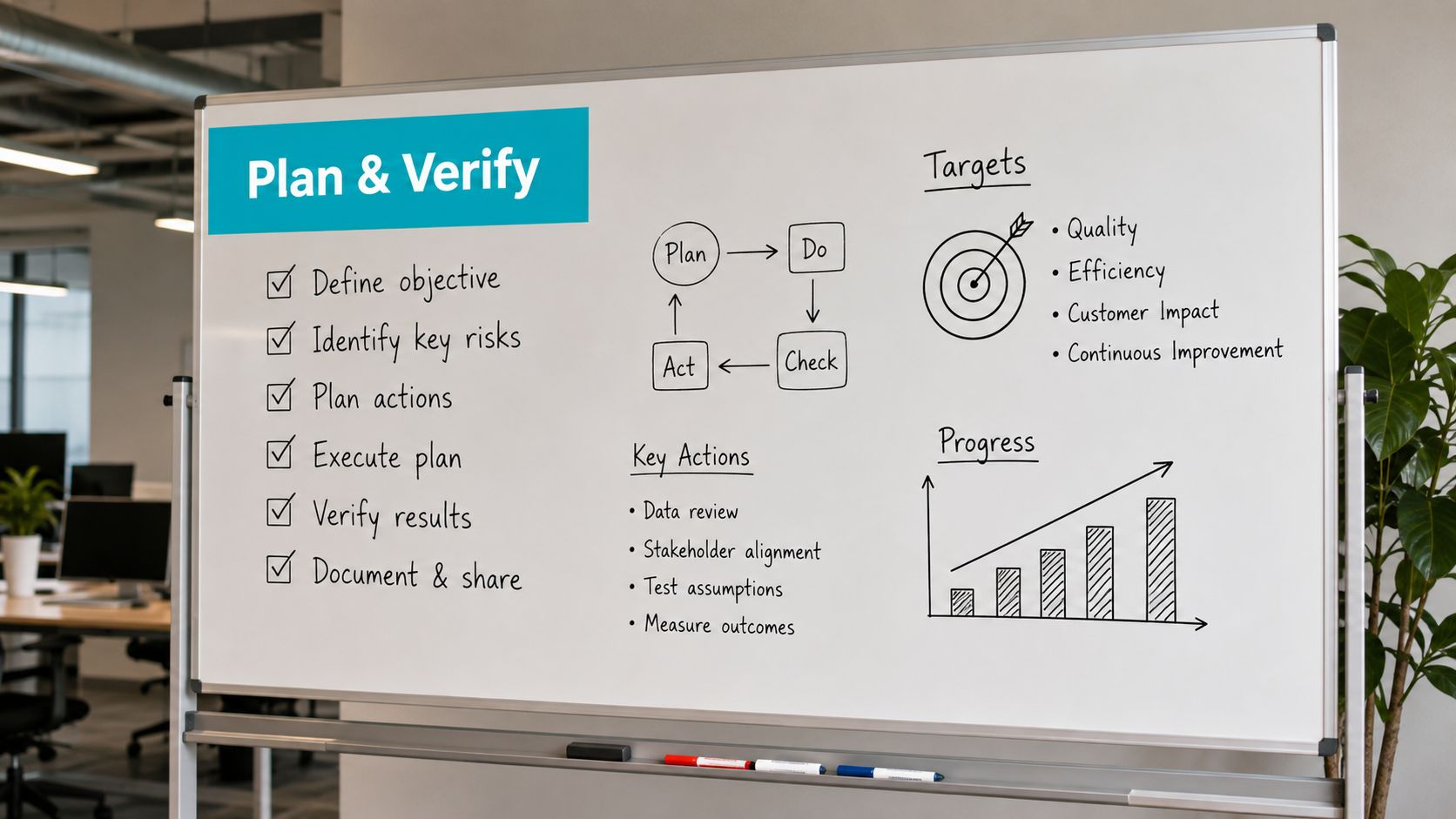
- Define the required RPO and RTO.
- Select primary-replica, synchronous cluster, active-active, storage, file, object, VM, or container replication.
- Document acceptable lag and the alert condition.
- Separate replicas from the primary's power, storage, credentials, and failure domain.
- Retain independent backups with historical recovery points.
- Schedule verification and restore drills.
- Test promotion, application validation, and rollback.
- Record the last successful recovery point and review the runbook quarterly.
- Confirm the replica can serve traffic before an incident.
ARPHost provides colocation, bare metal, VPS, Proxmox private clouds, Proxmox Backup services, and managed IT operations for teams building monitored replication and tested recovery paths.
ARPHost, LLC can help you map database, storage, and VM replication to practical recovery objectives, with infrastructure operated from its Tampa, Florida facilities. Visit ARPHost, LLC to discuss a design that includes monitoring, offsite backups, and recovery testing rather than replication alone.
Leave a Reply
You must be logged in to post a comment.